For more than two decades the enclosed flybridge has been one of the defining features of the Maritimo’s M variants of their Long Range, Luxury Motor Yachts. What began with a clear philosophy around safety, comfort and practical cruising has evolved through successive generations of M Series yachts, into an increasingly sophisticated interpretation of the enclosed flybridge.
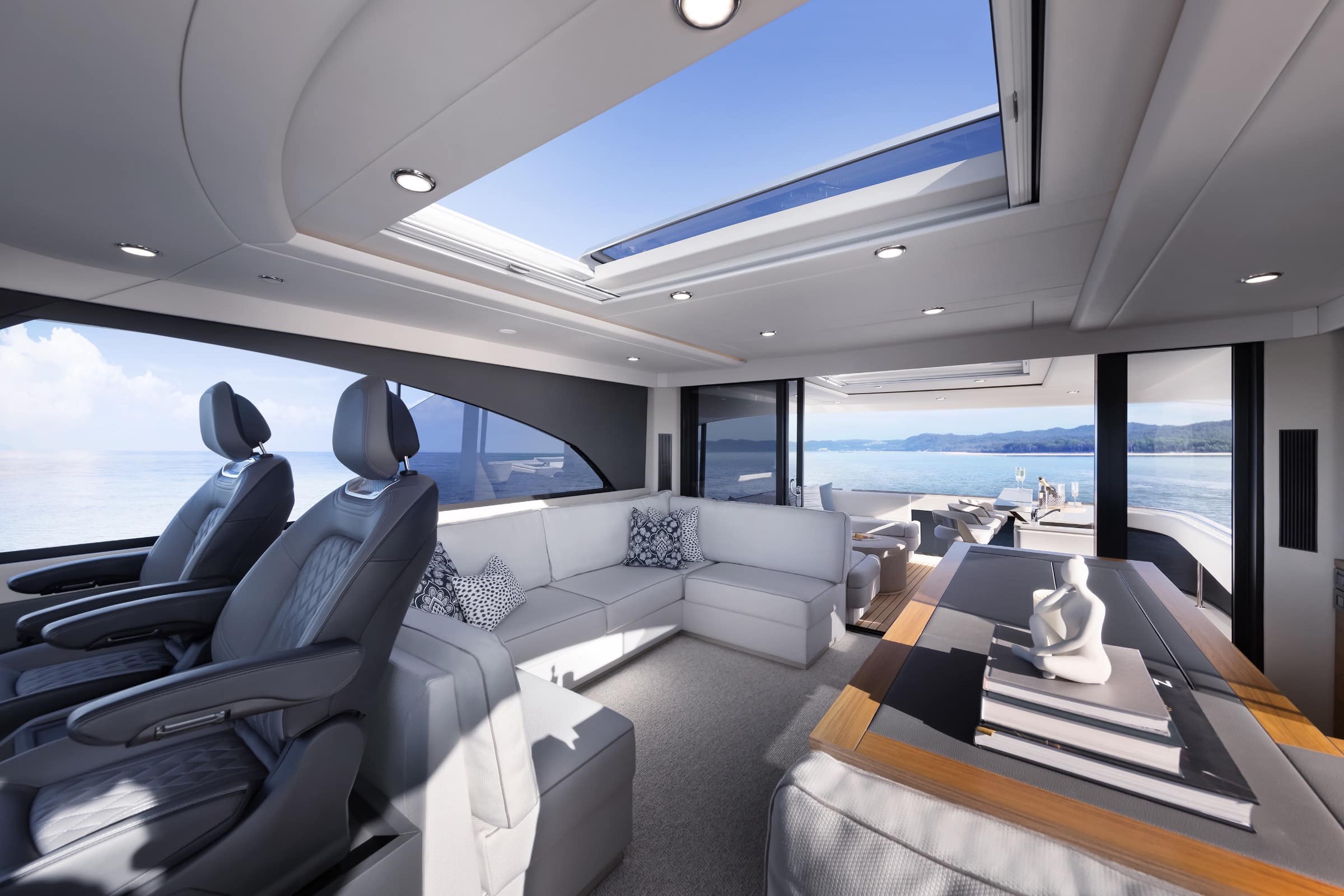
Today models such as the M75, M60, M55 and M50 demonstrate how far the original concept has progressed. Yet the fundamentals remain remarkably consistent. The flybridge is still about creating a commanding helm position, but also creating another complete living environment, as well as giving owners the ability to cruise comfortably and safely in a wide range of weather conditions.
For Phil Candler, Operations Manager, who has been closely involved in Maritimo’s development journey from the very early years, the story is one of continuous refinement, rather than sudden change.
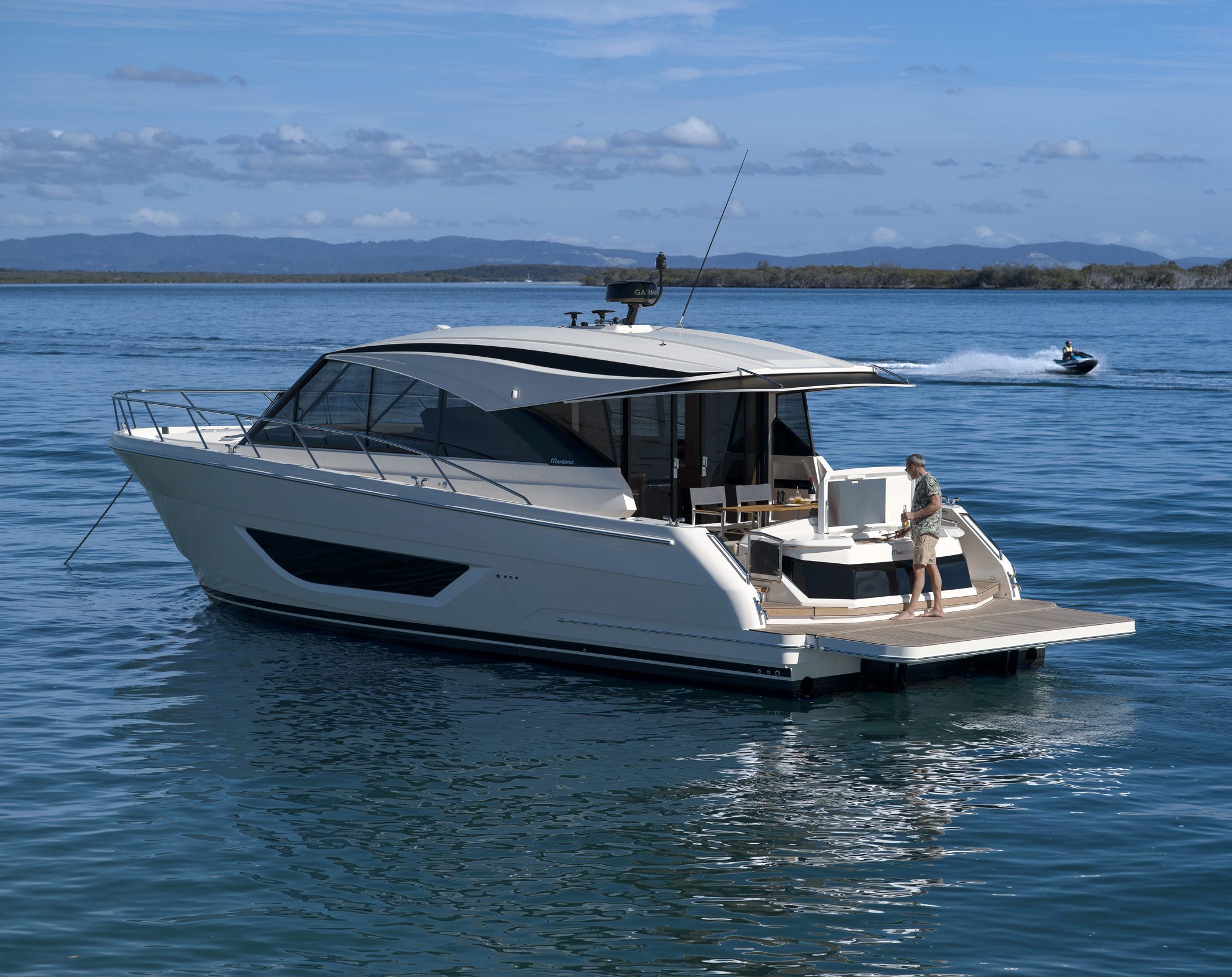
“At the very beginning of Maritimo it was very much about a holistic view of how you do boating,” Candler explained. “One of the earliest of priorities for Bill, (Bill Barry-Cotter AM, Maritimo’s Founder) was the walkaround side decks. The ability to move people easily and safely from the stern to the bow was fundamental in his design philosophy. It meant easier movement for everyone on board, including children, older people and pets, while reducing the need for high bow rails,” Candler said.
That same thinking became central to the development of the enclosed flybridge. More than twenty years ago a fully enclosed flybridge was far from commonplace in the category. While some boats offered a level of protection with three-sided formats, the concept of a fully enclosed, climate controlled, upper living space was considerably less common.
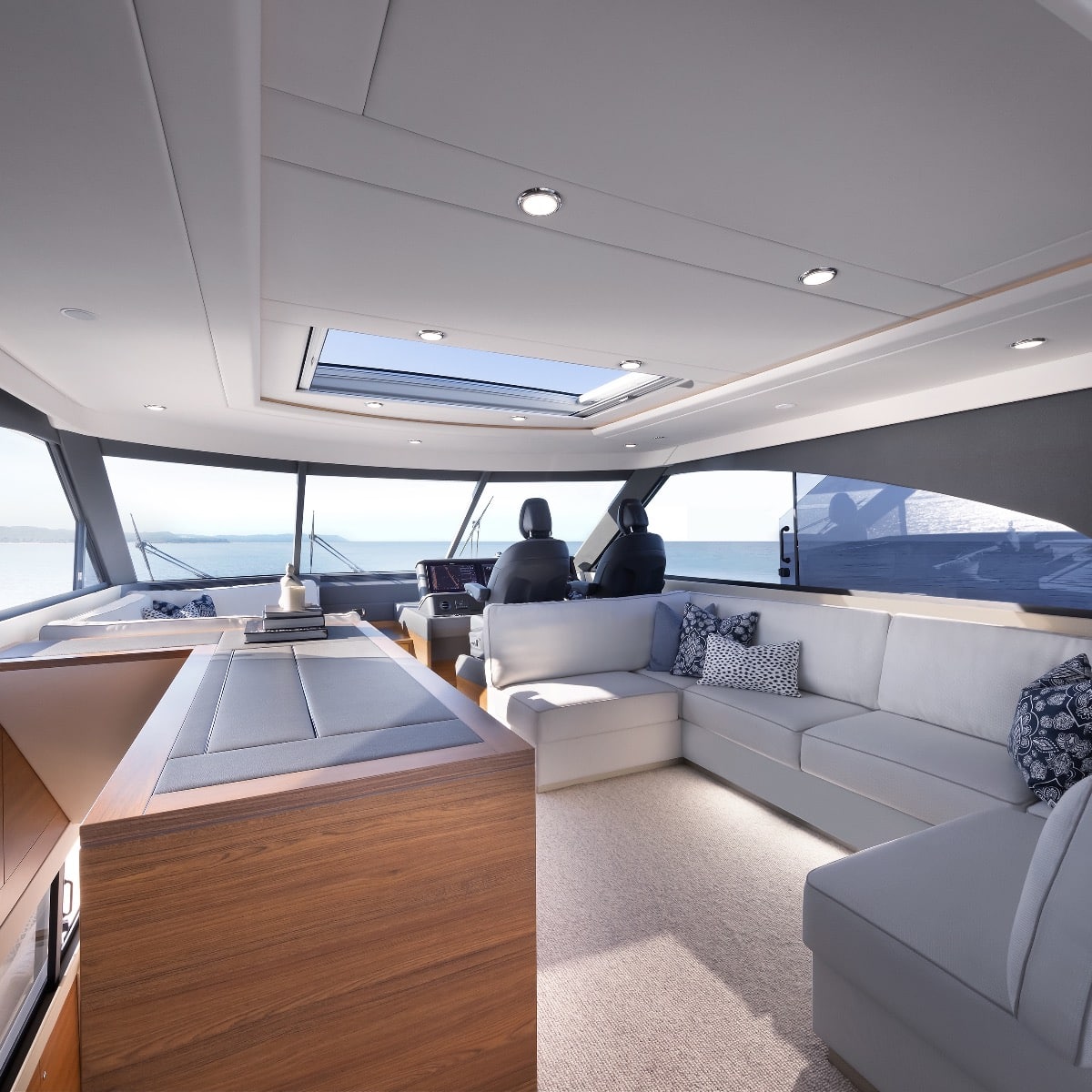
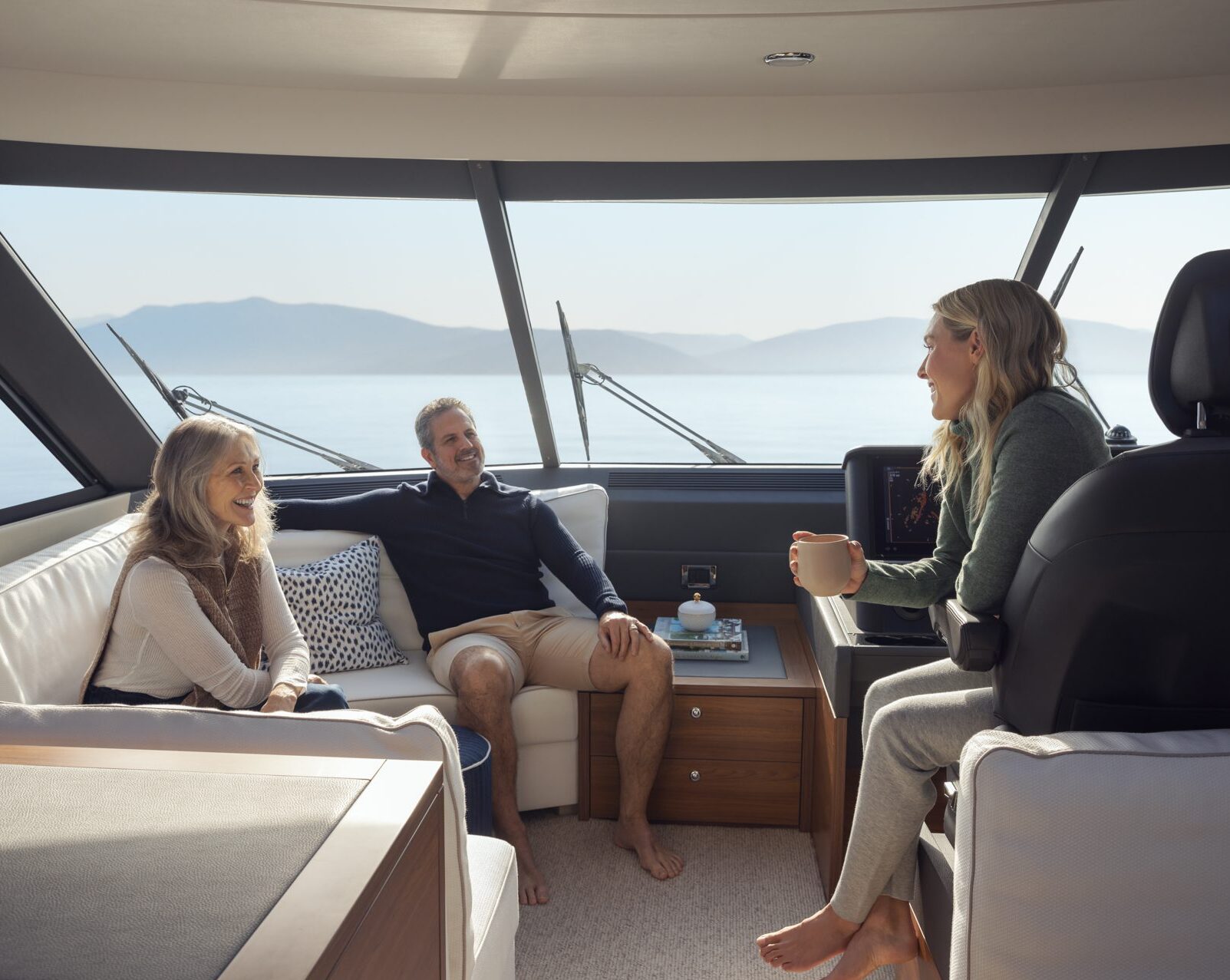
Maritimo saw the opportunity to make the flybridge something more than an elevated helm station. “It was about recognising the value of the upper flybridge area,” Candler stated. “It’s another potential cabin for overflow, another entertaining area, one that’s as comfortable and as styled as the rest of the boat, and whilst it is on another level, keeping it connected to the rest of the boat.”
That philosophy remains evident throughout the current M Series. The M75 takes the concept to a particularly expansive level, with a flybridge that can function as a genuine second living environment, while the M60 and M55 deliver the same philosophy in their respective volume and dimensions. The M50 brings the enclosed flybridge concept into a smaller overall package by comparison, but achieving the volume of what would have come from a model much larger, only a few years ago. The evolution has not simply been about making the flybridge bigger. It has been about understanding how every millimetre of available space can be used more effectively.
One of the most significant developments was the evolution of the flybridge overhangs and wings. Originally conceived around safety, shade and styling, they have progressively become an important part of the overall spatial design.
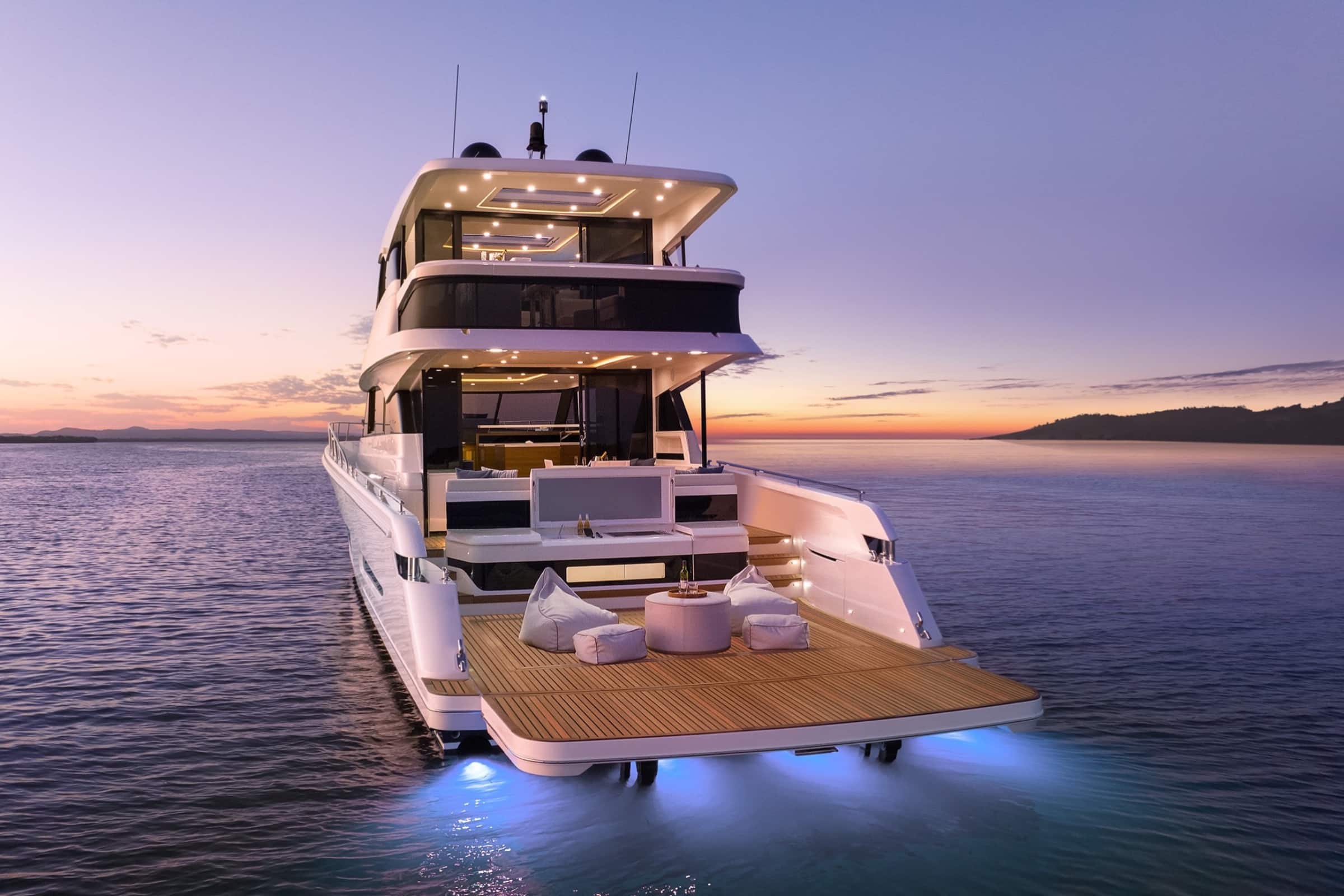
“We’ve stayed pretty true to the concept of the overhangs outside of the bridge,” Candler says. “What we did as we developed the newer boats is we utilised that interior function and made the flybridges much larger on the inside.”
The staircase has also become an important part of that evolution. The move to an internal staircase and the development of the reverse staircase arrangement improved accessibility, while allowing the flybridge to integrate much more naturally with the main saloon.
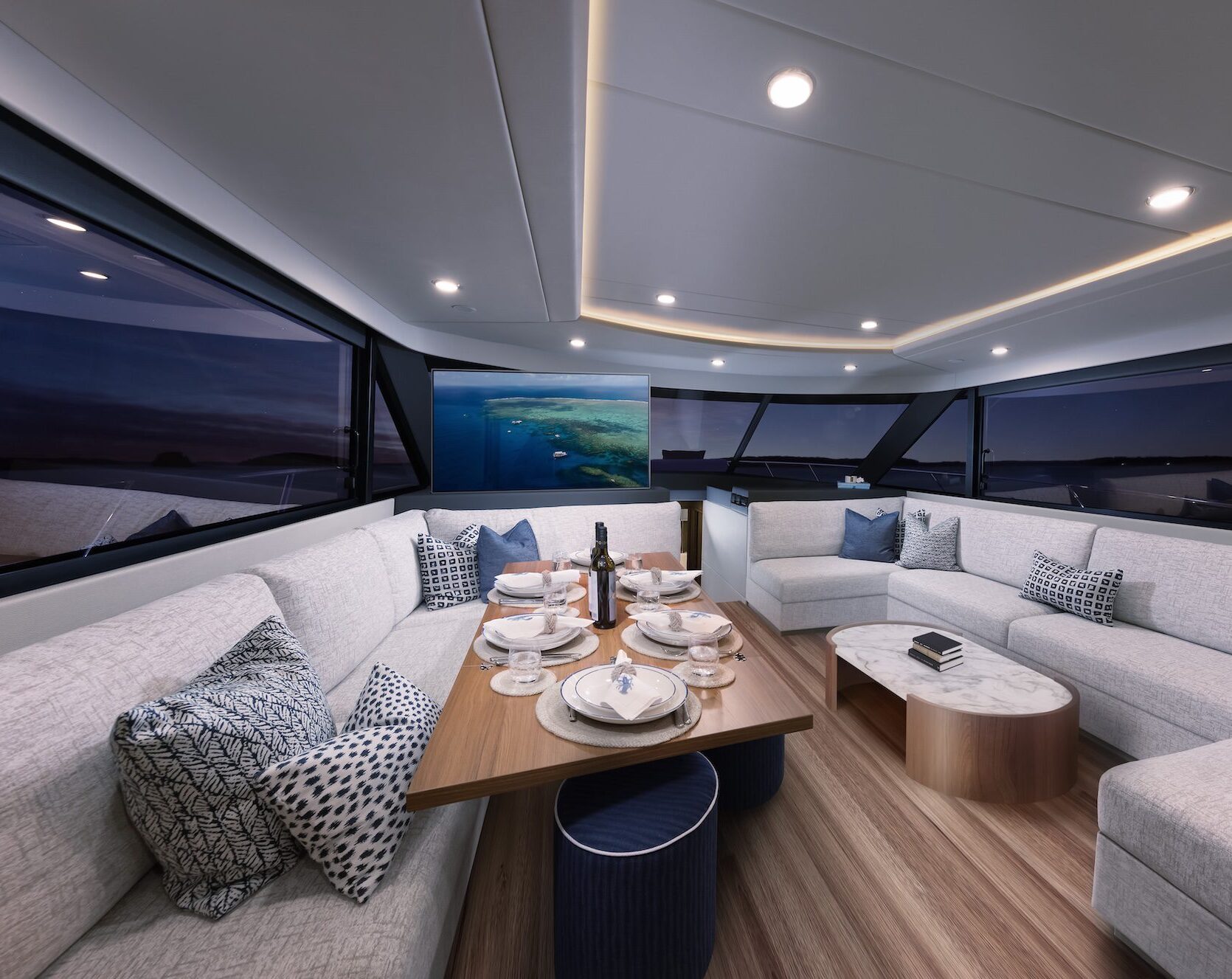
The result is visible in today’s M Series. The M60, for example, incorporates an internal staircase, a fully enclosed climate controlled ‘Skylounge’, and an expansive protected balcony deck. The current M60 provides more than 11 square metres of protected flybridge exterior space and more than 25 square metres of combined flybridge living area when the interior and exterior spaces are considered together.
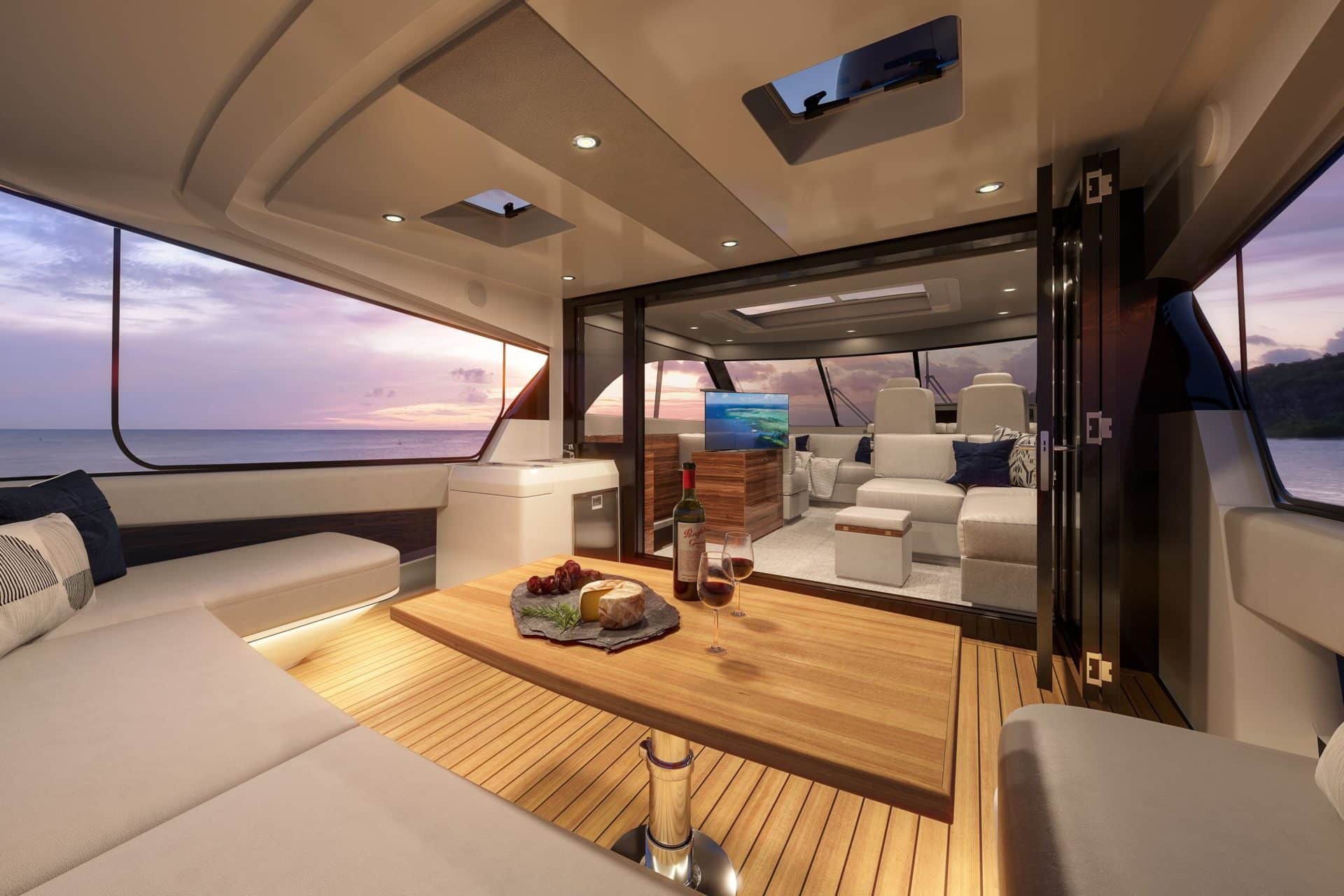
But perhaps the most remarkable aspect of the development is how much has changed beneath the surface. The original M60 conceived in the early 2000’s and today’s M60 share a name and a fundamental design philosophy, but the difference in volume, functionality and technology is substantial. By comparison today’s version of the M60 has 20% more available volume in the flybridge area compared with the original version.
Modern Maritimo’s incorporate televisions, refrigeration, additional cruising lounges, larger accommodation areas and increasingly sophisticated systems that simply were not contemplated when the original Maritimo was designed.
Candler describes the process as a continual development journey.
“A lot of those things weren’t thought of then. The journey of building houses, building boats, redeveloping houses, redeveloping boats, automotive influences, all that journey is critical and important in the journey of development and design of luxury motor yachts as well.”
Rather than attempting to predict every future development, Maritimo continually evaluates new technologies and manufacturing processes and determines where they can genuinely improve the boat.
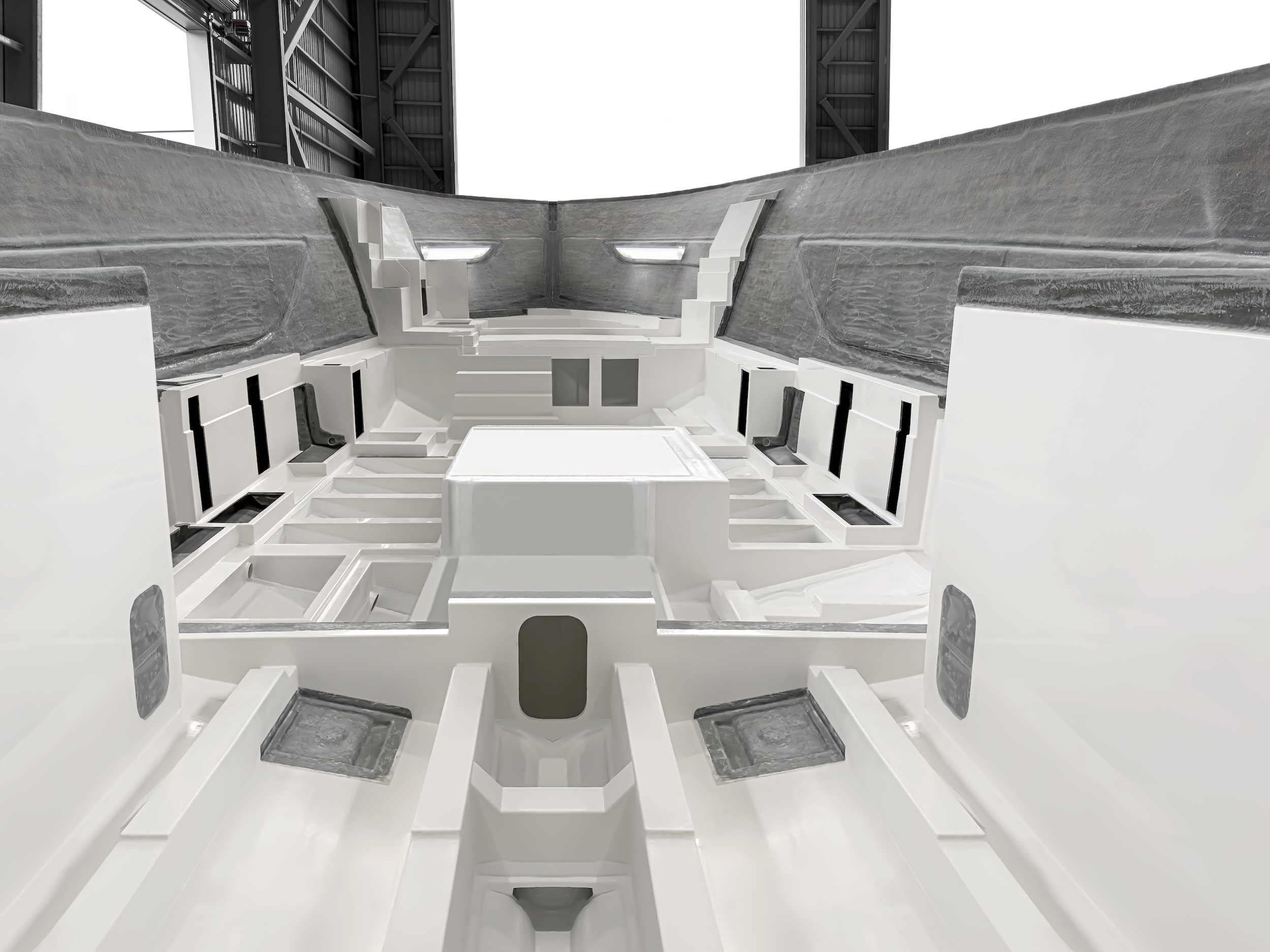
“We’re not trying to be ahead of it,” Candler explained. “We’re not trying to be the next one that breaks the sound barrier or something, but we’re very conscious that we need to be in the trends that are moving while sticking true to the foundations of our company and our design.”
That approach has been particularly important as manufacturing technology and materials have changed.
The windows are a prime example. Early Maritimo boats did not have the large expanses of glazing that are now a defining feature of the brand’s visual appeal. Developments and bonding technology have allowed designers to introduce larger windows and different configurations, fundamentally changing the relationship between the interior and the outside world.
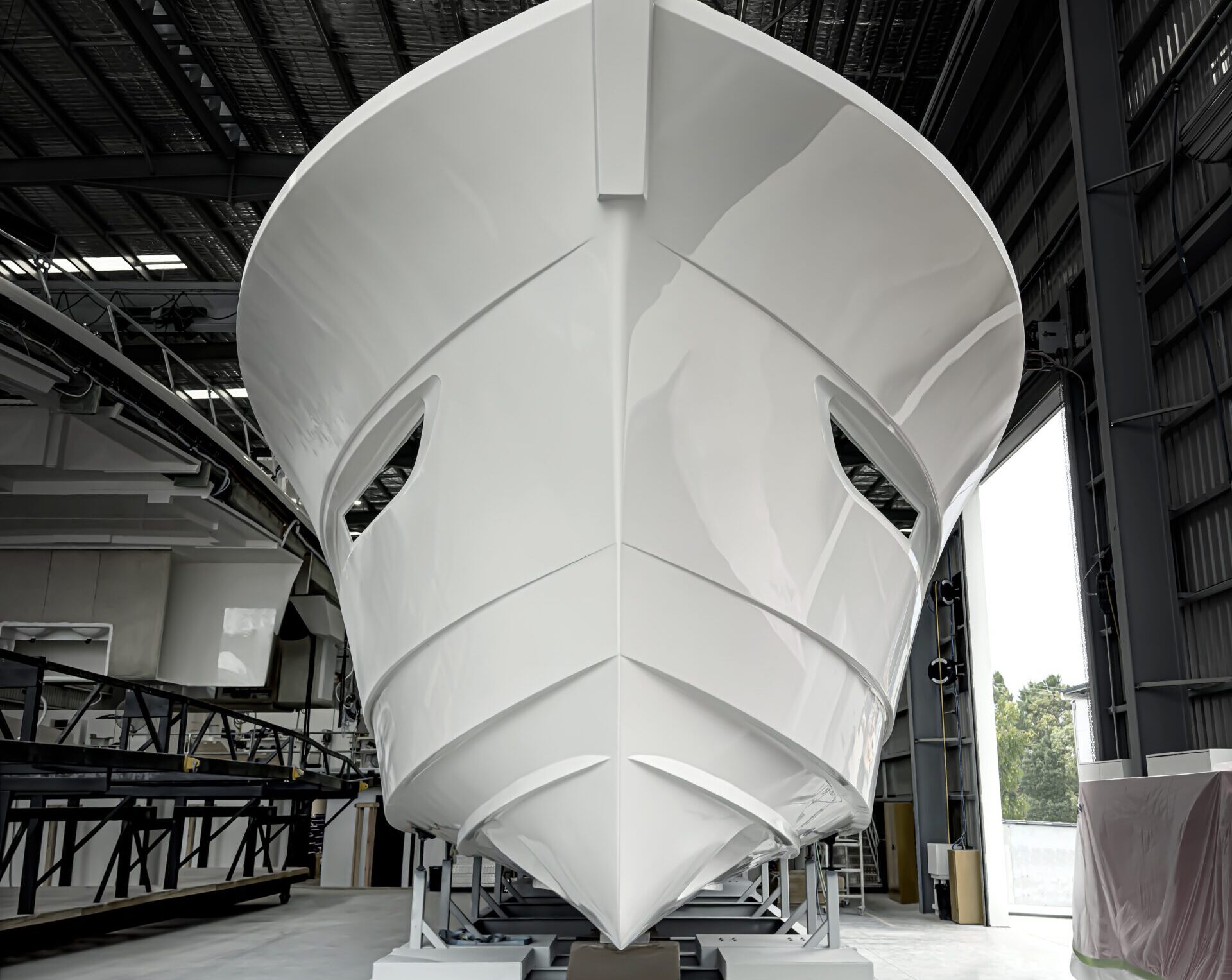
The same applies to construction laminates, liners, bonding systems and non-structural materials used throughout the yacht.
One of the less visible but increasingly important developments has been weight reduction. As boats have become larger and more sophisticated, owners have also added more equipment and more personal items. Refrigerators, freezers, televisions and other systems all contribute to displacement. The answer is not simply to make the hull lighter. For Maritimo, structural integrity and seakeeping remain the primary considerations.
“Our focus on safety of the structure of the hull, the deck, the flybridge is highest,” Candler says. “Then there’s materials and then there’s weight. We look at it in that order to ensure that the safety and seakeeping abilities are first.”
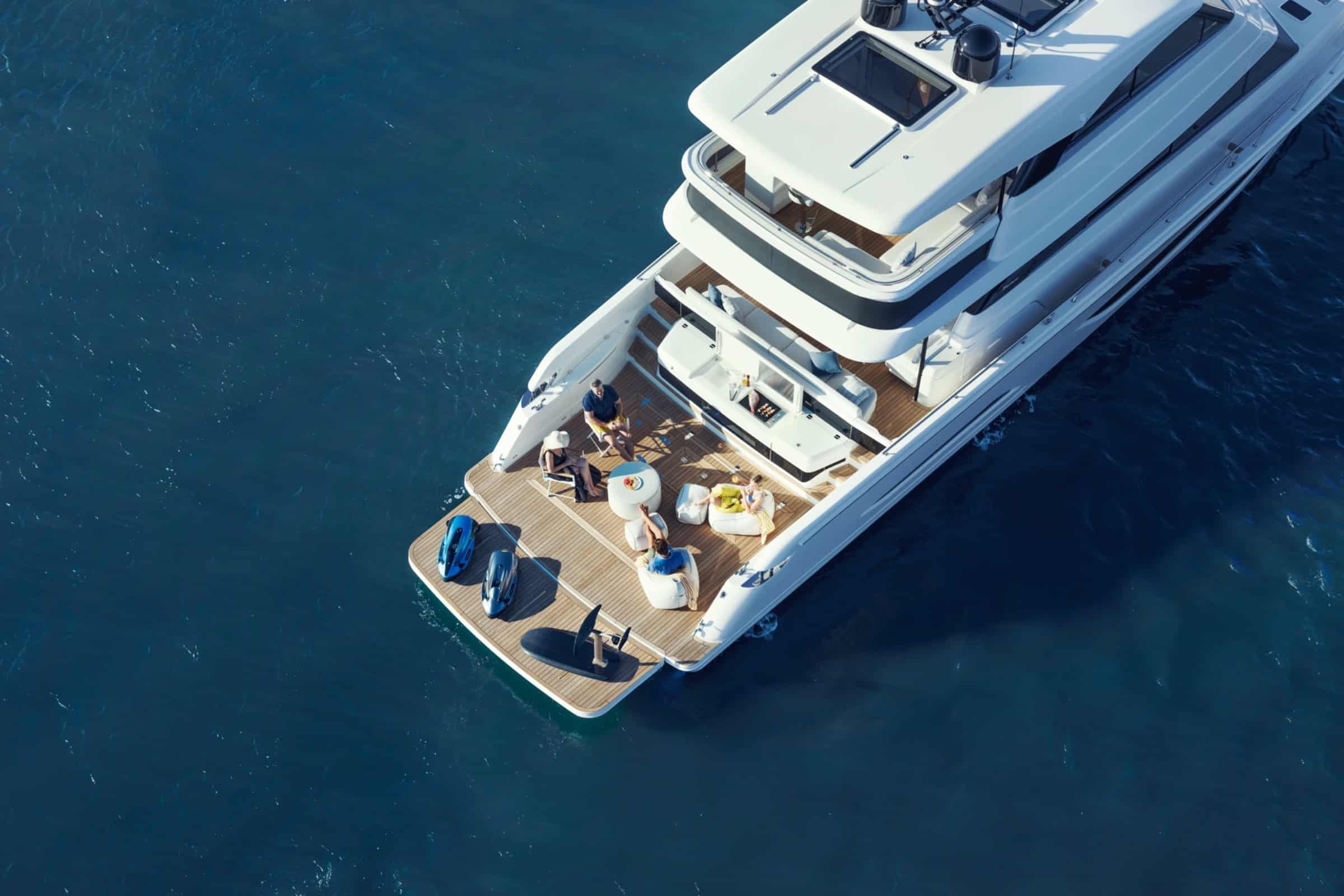
Advances in materials now provide opportunities to reduce weight in areas that do not compromise structural performance. Candler pointed to newer lightweight core materials being considered for furniture and other applications, replacing heavier timber-based components, while maintaining the required strength and durability.
The principle is simple. Every kilogram saved in one part of the yacht can potentially be allocated somewhere else, whether that is additional equipment, greater cruising capability, or simply more efficient performance.

The development of the M55 and M75 demonstrates how this philosophy has continued to mature. Both became important benchmarks in the development of Maritimo’s current generation of yachts, with learnings from one model feeding into the next. The M55 and S55 platform, in particular, became a significant reference point for subsequent development, with shared learnings flowing into the M60, S60 and 600 Series Offshore models.
The M and the S variants. A shared vision but distinctly different development.
Crucially, Maritimo does not treat its M Series and S Series as the same yacht with a roof added or removed.
“We’ve recognised the opportunity to have an M boat development and have an S boat development separately,” Candler says. “There’s some engineering equal influence, but then when we get into style design, the layout and furniture, we recognise that we need to continue to move forward further to have a separation of the two different products.”
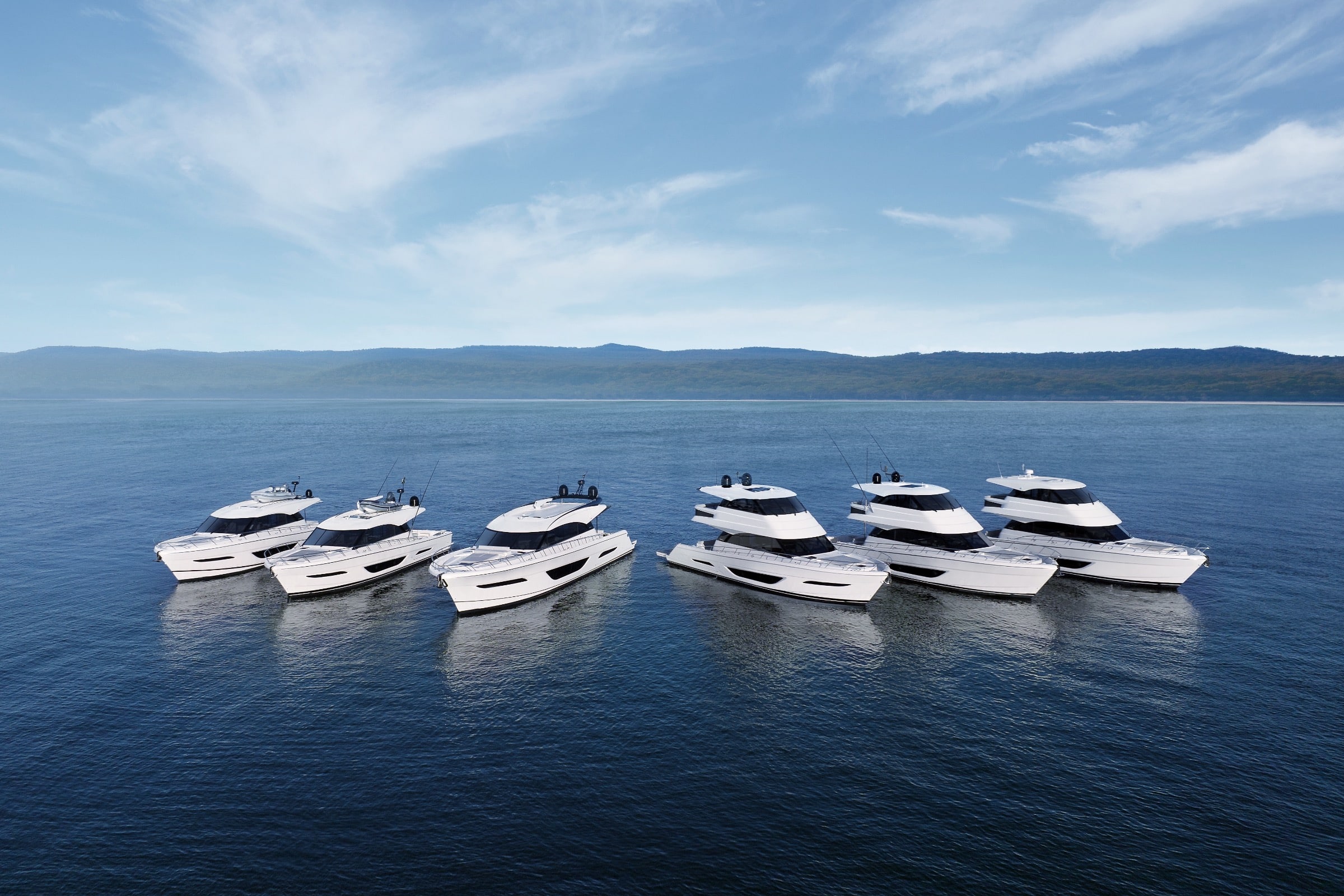
That philosophy has become increasingly evident in the latest generation. The M75 and S75 may share a common design language and engineering philosophy, but they offer distinctly different experiences. The M75 uses the enclosed flybridge to create another substantial living environment, while the S75 provides a single level experience centred around the main saloon.
The development process itself has also changed.
Rather than simply progressing one model at a time, Maritimo now has multiple concepts and development programs underway simultaneously. Ideas and technologies can move between projects, with successful solutions refined and adapted for other models.
Ongoing client engagement is a critical part of the model development pathway.
“We’re learning from one vessel’s development to the next,” says Candler. “We actively seek owner participation and feedback in this process,” he added. Customer feedback has become an increasingly important part of our development system. Maritimo engages owners during development, testing concepts and asking detailed questions about how they use their boats. The objective is not simply to add features, but to understand whether those features genuinely improve the cruising experience.
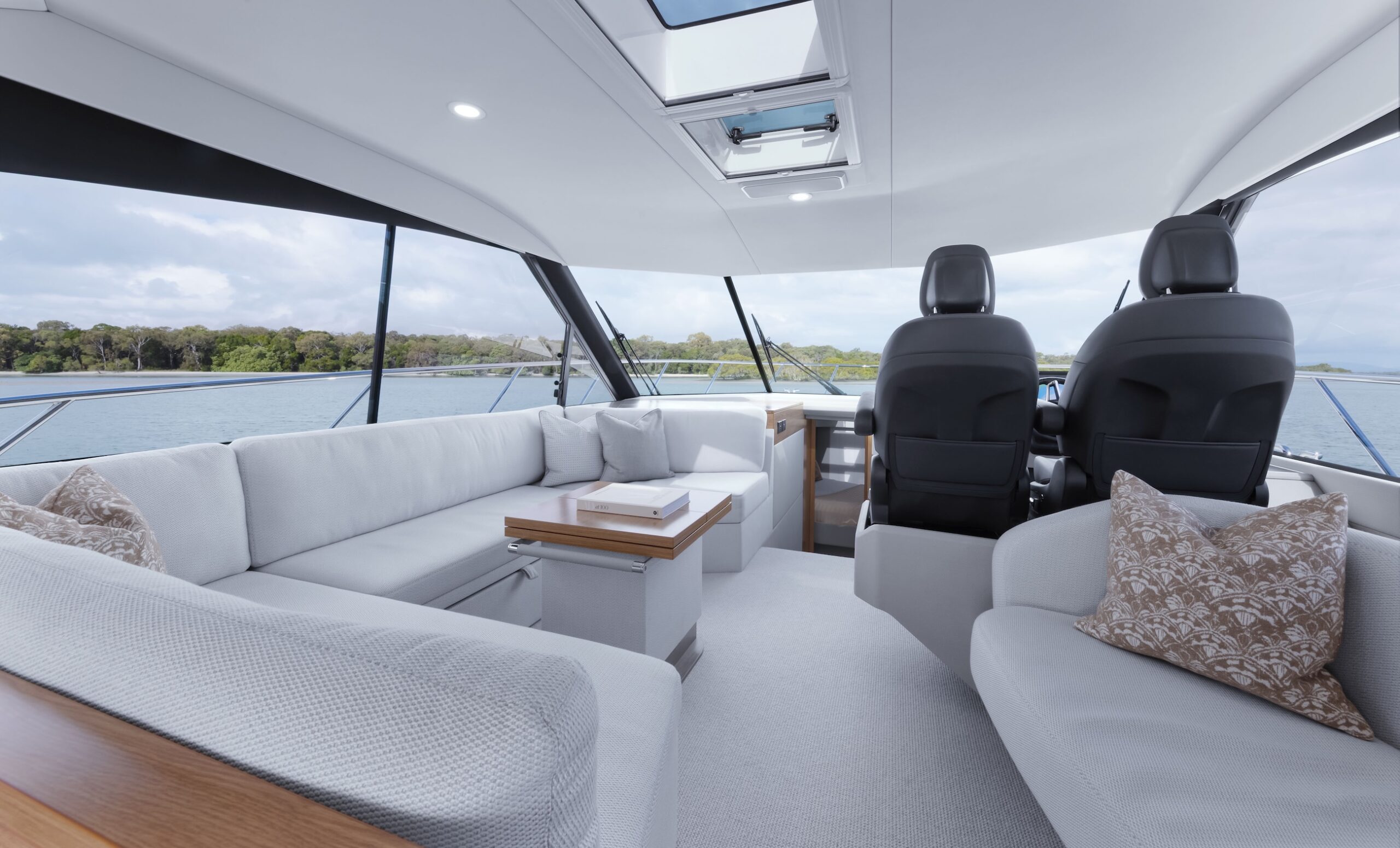
That philosophy is reflected in smaller details as much as major innovations. Changes to moulding processes can create additional usable space. Improvements to saloon glazing can bring more natural light into the galley. Furniture construction can become lighter while maintaining its strength. Manufacturing processes can become cleaner and more integrated.
Candler describes it as, “incremental improvements in every aspect.” That may ultimately be the clearest description of the Maritimo enclosed flybridge story.
The relentless pursuit of improvement. AKA – question everything.
There has been no single moment when the concept was reinvented. Instead, more than two decades of development have progressively refined the original idea. The walkaround decks remain. The focus on safety remains. The enclosed flybridge remains. The aft galley remains. The inline shaft configuration remains. The structural philosophy remains.
What has changed is everything around those foundations.
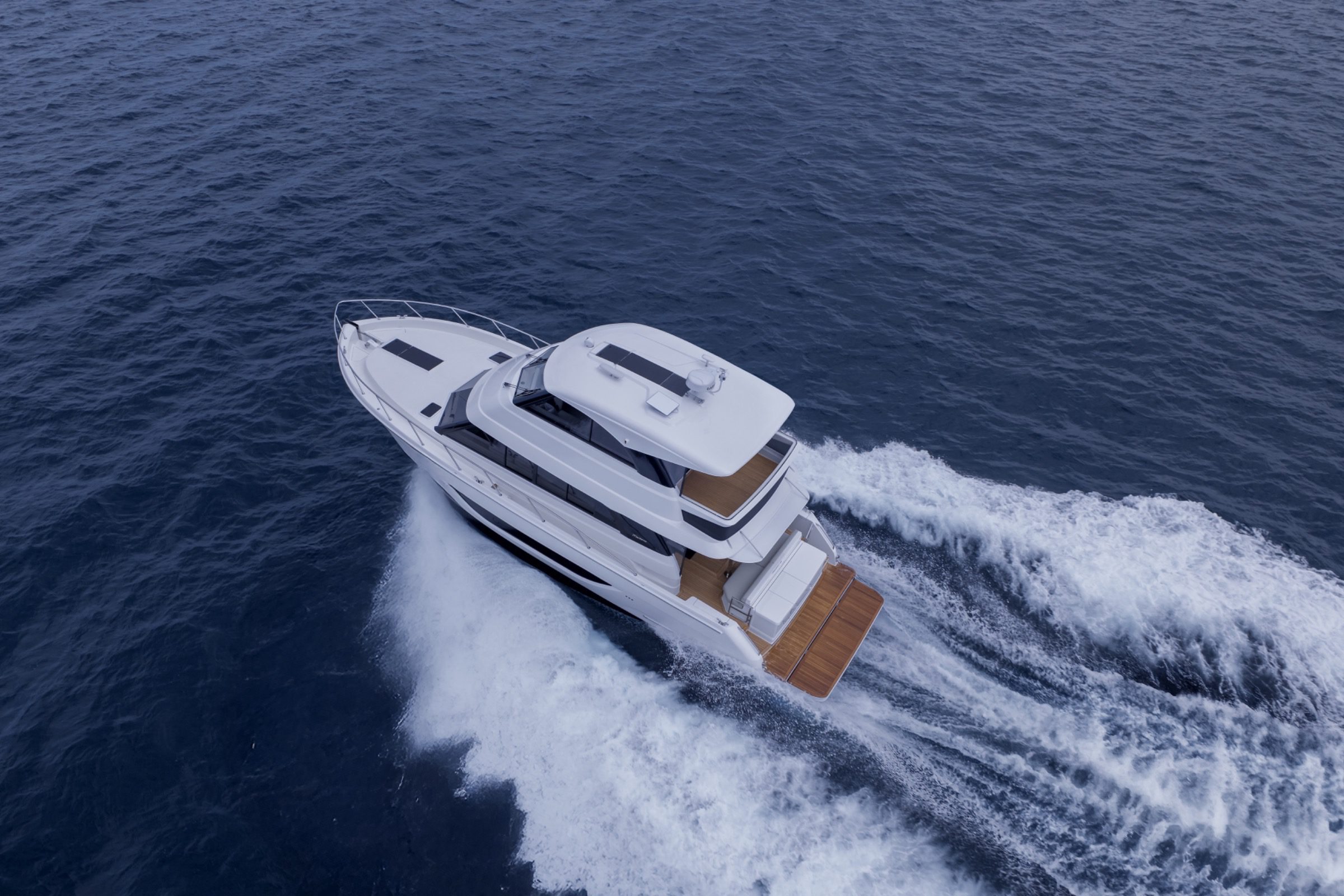
“Materials have become lighter and more sophisticated. Glass areas have increased. Manufacturing has become more integrated. Interior spaces have become larger and more flexible. Flybridges have become genuine living environments. Technology has expanded what can be carried and how the yacht can be operated. Customer expectations have evolved, and Maritimo has evolved with them,” Candler summarised.
And our development continues said Candler.
“We’ve got another three boats in design right now that we’re relooking at these very things,” Candler says. “We’re looking at the bridge, looking at the overhangs, looking at the style, looking at the safety, looking at the engine rooms to ensure that we keep up with the next trend or the next technology and manufacturing process.”
That is perhaps the enduring character of the Maritimo enclosed flybridge. It was never intended to be a static design statement. It is an ongoing expression of how Maritimo believes a long-range motor yacht should be used.
Twenty-two years after the first concept, the enclosed flybridge has become a signature part of the Maritimo identity. The current M Series luxury motor yachts represent the latest interpretations, but the philosophy remains the same: safety, comfort, intelligent use of space, structural integrity and the freedom to enjoy more of the journey.